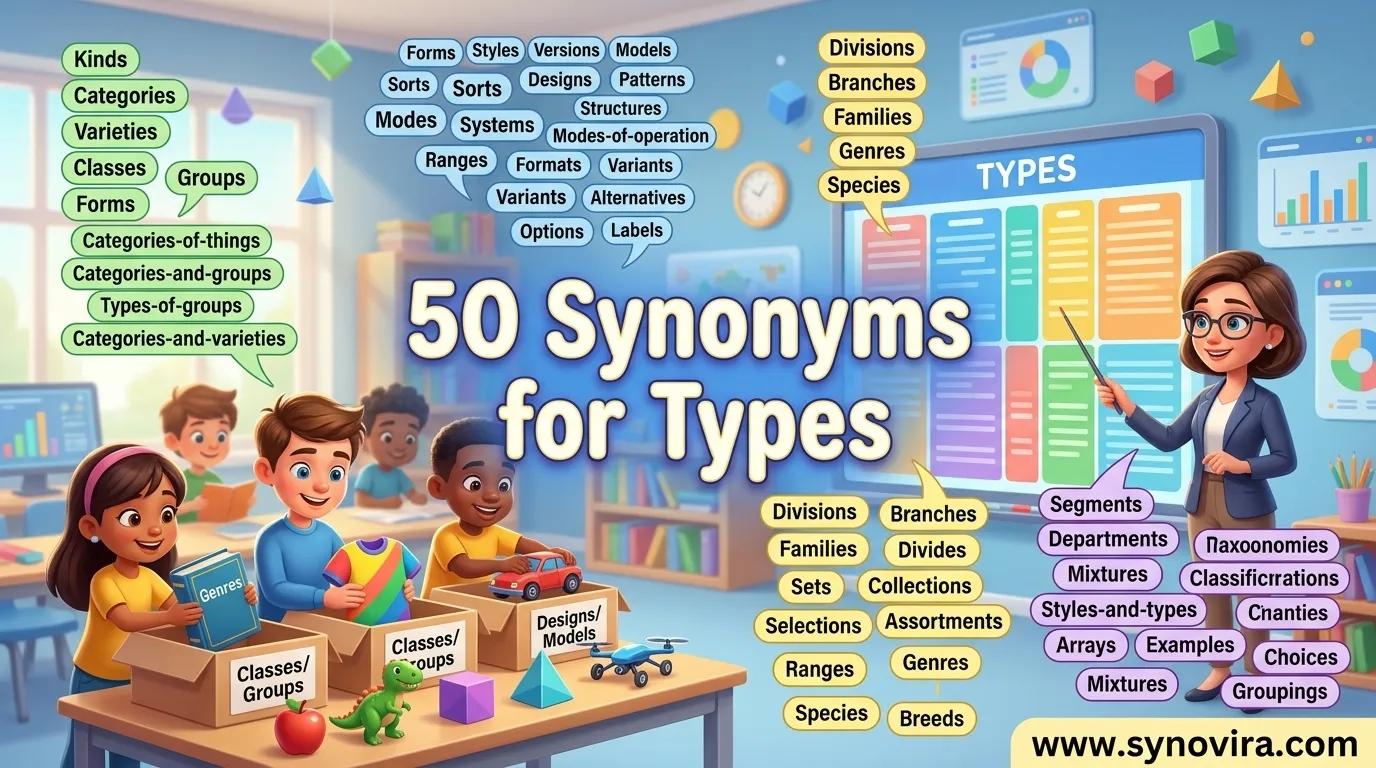
Have you ever written the word “types” many times in one paragraph? It can happen in school essays, blog posts, business writing, or even daily conversations. That is why learning synonyms for types is very helpful for better English.
The word “types” means different kinds, groups, or categories of something. For example, there are many types of fruits like apples, bananas, and oranges.
Learning synonyms of types helps students improve essays, bloggers create smoother content, and daily English users speak more clearly. These alternate words for types also make communication sound smarter and less repetitive. Using different words helps your writing feel fresh, natural, and more professional.
✨ Top 5 Synonyms for Types ✨
- Kinds
- Categories
- Varieties
- Classes
- Groups
🌟 Next 5 Synonyms for Types 🌟
- Forms
- Styles
- Versions
- Models
- Sorts
Pronunciation of “synonyms for types”
- Phonetic Spelling: sin-uh-nimz for tahyps
- IPA Format: /ˈsɪnəˌnɪmz fɔːr taɪps/
- Simple Breakdown: syn-o-nyms / for / types
Syllables of “synonyms for types”
- Synonyms = 3 syllables
- For = 1 syllable
- Types = 1 syllable
Simple Breakdown:
syn-o-nyms for types
When to Use Synonyms for Types
You can use types synonyms in essays, blogs, school work, business writing, presentations, and daily conversations.
Students use another word for types to improve writing quality and avoid repeating the same word. Bloggers use alternate words for types to make articles more engaging and SEO-friendly. These words are also useful in teaching, marketing, product descriptions, and social media captions.
Comparison Table “synonyms for types”
| Synonym | Simple Meaning | Best Usage |
| Kinds | Different groups | Daily conversation |
| Categories | Organized groups | Academic writing |
| Varieties | Different versions | Product descriptions |
| Classes | Divided groups | Educational use |
| Styles | Different looks or methods | Fashion and design |
List of 50 Synonyms for Types
Kinds
Meaning
Different groups of things.
Examples
- There are many kinds of flowers.
- She likes different kinds of music.
Categories
Meaning
Groups with similar things.
Examples
- The books were sorted into categories.
- We studied food categories in class.
Varieties
Meaning
Different forms of something.
Examples
- The store sells many varieties of tea.
- We tasted different varieties of apples.
Classes
Meaning
Groups sharing similar features.
Examples
- Animals belong to different classes.
- The teacher explained social classes today.
Groups
Meaning
Collections of similar things.
Examples
- Students formed small groups.
- The animals were divided into groups.
Forms
Meaning
Different shapes or versions.
Examples
- Water exists in many forms.
- Art comes in different forms.
Styles
Meaning
Different ways of doing or designing something.
Examples
- She loves modern styles of clothing.
- The house has unique styles inside.
Versions
Meaning
Different forms of the same thing.
Examples
- The app has two versions.
- We watched different movie versions.
Models
Meaning
Specific designs or examples.
Examples
- The company released new car models.
- We compared phone models yesterday.
Sorts
Meaning
Different kinds of things.
Examples
- I enjoy all sorts of games.
- The shop sells many sorts of bread.
Categories-of-things
Meaning
Different organized groups.
Examples
- The teacher explained categories-of-things carefully.
- We learned categories-of-things in science.
Divisions
Meaning
Parts separated into groups.
Examples
- The company has many divisions.
- The book contains several divisions.
Branches
Meaning
Parts connected to a main subject.
Examples
- Science has many branches.
- The bank opened new branches nearby.
Families
Meaning
Groups with shared qualities.
Examples
- Roses belong to flower families.
- Language families are interesting to study.
Sets
Meaning
Collections of related items.
Examples
- The cards came in colorful sets.
- Students worked in math sets today.
Collections
Meaning
Groups gathered together.
Examples
- The museum displayed art collections.
- She owns collections of old coins.
Selections
Meaning
Chosen groups of things.
Examples
- The menu has wide selections.
- We viewed book selections online.
Assortments
Meaning
Mixed collections of things.
Examples
- The box contained candy assortments.
- Stores sell flower assortments in spring.
Ranges
Meaning
Different levels or groups.
Examples
- The store offers price ranges.
- We explored color ranges today.
Genres
Meaning
Categories of art or entertainment.
Examples
- I enjoy many music genres.
- The library has fiction genres.
Species
Meaning
Different groups of living things.
Examples
- Many bird species live here.
- Scientists discovered new species recently.
Breeds
Meaning
Specific kinds of animals.
Examples
- The farm has many dog breeds.
- We learned about horse breeds.
Designs
Meaning
Different planned looks or patterns.
Examples
- The shop displayed dress designs.
- We liked the chair designs.
Patterns
Meaning
Repeated styles or forms.
Examples
- The fabric has floral patterns.
- We studied weather patterns today.
Modes
Meaning
Ways or methods of something.
Examples
- The phone has different modes.
- We discussed travel modes in class.
Systems
Meaning
Organized methods or groups.
Examples
- Schools use grading systems.
- We studied computer systems yesterday.
Structures
Meaning
Ways parts are arranged.
Examples
- Buildings have different structures.
- We learned sentence structures today.
Categories-and-groups
Meaning
Organized sections of things.
Examples
- The teacher explained categories-and-groups clearly.
- We sorted toys into categories-and-groups.
Modes-of-operation
Meaning
Different working methods.
Examples
- Machines have many modes-of-operation.
- The camera offers special modes-of-operation.
Formats
Meaning
Specific arrangements or layouts.
Examples
- The file comes in many formats.
- We compared document formats yesterday.
Variants
Meaning
Slightly different versions.
Examples
- Scientists studied virus variants carefully.
- The game has color variants.
Alternatives
Meaning
Different choices or options.
Examples
- We explored healthy alternatives today.
- The menu offers meat alternatives.
Options
Meaning
Choices available to people.
Examples
- The website has many payment options.
- Students selected lunch options quickly.
Labels
Meaning
Names used for categories.
Examples
- The teacher used color labels.
- Food labels give useful information.
Types-of-groups
Meaning
Different categories together.
Examples
- The project studied types-of-groups online.
- We learned types-of-groups in class.
Segments
Meaning
Separate parts of something.
Examples
- The show had funny segments.
- The market has customer segments.
Sections
Meaning
Divided parts or areas.
Examples
- The store has toy sections.
- We cleaned different room sections.
Departments
Meaning
Special areas of work or study.
Examples
- The hospital has many departments.
- Students visited science departments today.
Divides
Meaning
Separated groups or parts.
Examples
- The chart shows income divides.
- We discussed social divides in class.
Orders
Meaning
Arranged groups or ranks.
Examples
- Animals belong to scientific orders.
- Books were placed in neat orders.
Classifications
Meaning
Systems for organizing groups.
Examples
- Scientists use animal classifications.
- The teacher explained color classifications.
Taxonomies
Meaning
Organized naming systems.
Examples
- Biology uses taxonomies often.
- We studied plant taxonomies today.
Arrays
Meaning
Large organized groups.
Examples
- The store displayed arrays of shoes.
- We saw arrays of colorful lights.
Mixtures
Meaning
Groups made from different things.
Examples
- The snack was a mixture of nuts.
- We created paint mixtures in class.
Configurations
Meaning
Different arrangements or setups.
Examples
- Computers have many configurations.
- The room supports seating configurations.
Styles-and-types
Meaning
Different looks and categories together.
Examples
- The shop offers styles-and-types for everyone.
- We explored styles-and-types online.
Variations
Meaning
Different forms with small changes.
Examples
- The recipe has many variations.
- Language variations are interesting.
Examples
Meaning
Specific kinds used for explanation.
Examples
- The teacher gave many examples.
- We studied examples of poetry.
Choices
Meaning
Different things people can pick.
Examples
- The restaurant has healthy choices.
- Students had many activity choices.
Groupings
Meaning
Things arranged into groups.
Examples
- The chart showed color groupings.
- We practiced animal groupings today.
Categories-and-varieties
Meaning
Different organized kinds together.
Examples
- The lesson covered categories-and-varieties clearly.
- Shops display categories-and-varieties neatly.
FAQ About Synonyms for Types
What is another word for types?
Another word for types can be kinds, categories, varieties, or groups.
Why should students learn synonyms for types?
Learning synonyms of types helps students improve essays and avoid repeating the same word too often.
Are types synonyms useful for bloggers?
Yes. Bloggers use types synonyms to make content smoother, engaging, and SEO-friendly.
What is the easiest synonym for types?
“Kinds” is one of the easiest and most common alternate words for types.
Can I use these words in daily conversations?
Yes. These words are useful in speaking, emails, social media captions, and school work.
Conclusion
Learning synonyms for types is a simple way to improve your English vocabulary and communication skills. These words help students, bloggers, writers, and daily English users sound clearer and more natural.
Using synonyms of types makes essays, blog posts, emails, and conversations more interesting. When you know another word for types, your writing becomes smoother and less repetitive.
Practice these alternate words for types in daily conversations, assignments, social media captions, and presentations. Small vocabulary improvements can make your English stronger and more professional.
The more you learn types synonyms, the easier it becomes to express ideas clearly and creatively. Keep learning new vocabulary every day, and your confidence in English will continue to grow.
FAQ Schema-Friendly Questions
What are the best synonyms for types?
Some of the best synonyms are kinds, categories, varieties, groups, and classes.
What is a formal synonym for types?
“Categories” and “classifications” are formal alternate words for types.
Why do writers use synonyms for types?
Writers use them to avoid repetition and improve readability.
Can these synonyms improve writing skills?
Yes. They make writing more professional, natural, and engaging.
Are these words useful in blogging?
Absolutely. Bloggers use these synonyms to improve SEO and user engagement.

I am a creative content writer who enjoys sharing thoughtful wishes for synonyms and inspiring alternative for all occasions. My aim is to create meaningful words that help people celebrate moments, express feelings, and spread positivity.